
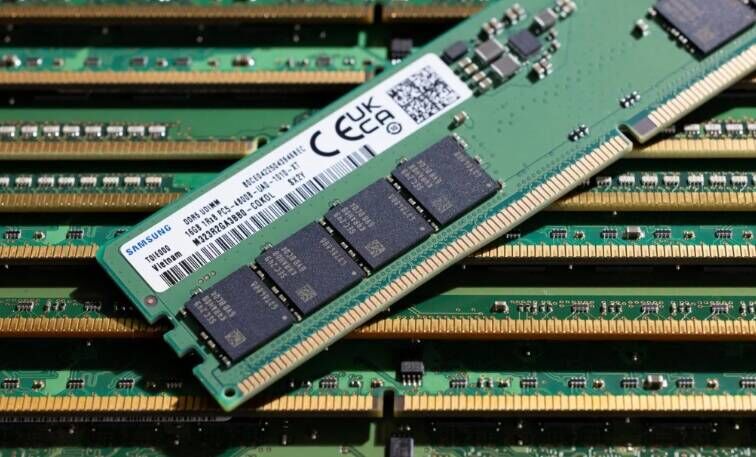

July 6, 2026 /SemiMedia/ — UBS has sharply raised its memory price forecasts, saying DRAM and NAND Flash prices are likely to increase more than previously expected as supply tightness continues across the industry.
The bank now expects DDR contract prices to rise 32% sequentially in the third quarter of 2026, compared with its previous forecast of 17%. Fourth-quarter prices are expected to rise another 18%, also above the earlier estimate of 12%.
UBS also raised its NAND Flash outlook. It now expects NAND contract prices to increase 30% sequentially in the third quarter, compared with a previous estimate of 17%, followed by another 12% increase in the fourth quarter.
The firm said the DRAM market could remain tight until at least the first half of 2028. UBS estimates that chip demand will grow about 36.2% in 2027, far above supply growth of about 19.3%, leaving a gap that may be difficult to close quickly.
Excluding downstream inventory replenishment effects, the DRAM supply shortage ratio is expected to worsen from 8.1% in 2026 to 13.6% in 2027. UBS said the scale of the supply-demand imbalance is rare by historical standards.
Higher prices are expected to significantly lift memory industry revenue. UBS forecasts that memory industry revenue will reach $992 billion in 2026 and rise further to $1.76 trillion in 2027.
Korean media previously reported that Samsung Electronics is seeking to raise DRAM average selling prices by up to 20% in the third quarter of 2026 from the previous quarter. Some consumer electronics brand customers have also reportedly received verbal price increase notices from Samsung.
Industry sources said tight supply is affecting LPDDR, server DRAM and general-purpose DRAM products. While higher component costs may eventually pass through to end-device prices and weigh on some consumer demand, memory suppliers still hold stronger pricing power because of continued demand from AI servers and data centers.
On the supply side, the three major memory manufacturers are accelerating expansion. Micron Technology is moving forward with a 1.5 trillion yen expansion at its Hiroshima site in Japan, focused on high-end products such as HBM. Shipments from the new capacity are expected around the summer of 2028. Japan’s government has pledged subsidies of up to 500 billion yen.
Micron is also expanding in the United States, including advanced fabs in Boise, Idaho, and a large production site near Syracuse, New York.
In South Korea, Samsung Electronics plans to build new memory fabs in Gwangju, while SK hynix is planning new fabs around the Jeolla region. These projects are viewed as part of South Korea’s broader semiconductor and AI infrastructure strategy.
However, analysts said new capacity will take time to build, equip and ramp to high yield. At the same time, demand for AI servers, HBM, DDR5, LPDDR and enterprise SSDs continues to grow, potentially absorbing much of the new supply.
The current memory upcycle is increasingly viewed as more than a traditional inventory cycle. AI training and inference are changing the long-term demand base for DRAM and NAND, while long-term supply agreements, prepayments, minimum price protections and capacity commitments are improving pricing visibility.




All Comments (0)