
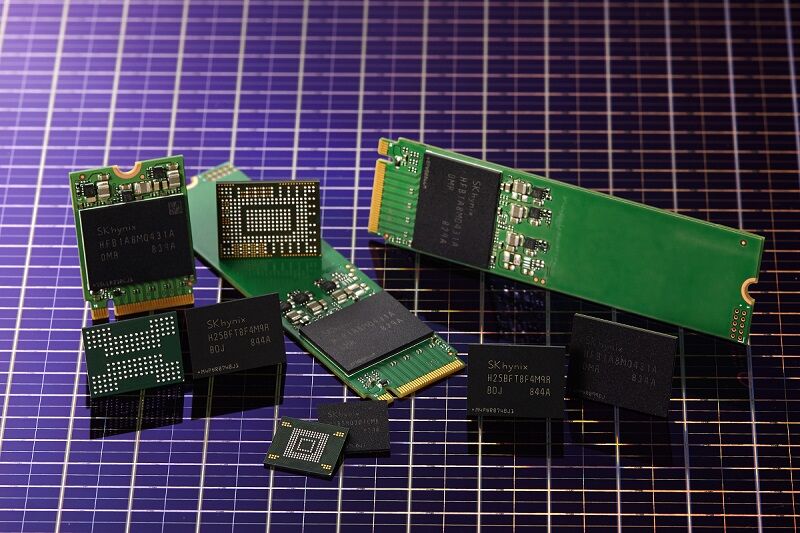

January 22, 2026 /SemiMedia/ — Kioxia’s General Manager of the Memory Business, Shunsuke Nakato, said recently that storage demand driven by the AI boom is expected to last at least into next year, with the company’s NAND production capacity for 2026 already close to being fully booked. He said contract prices under annual agreements are likely to rise, with increases reaching as much as 30% in some cases.
At the same time, Samsung Electronics and SK hynix, which together account for more than 60% of the global NAND market, plan to further cut NAND wafer output in 2026. According to data from Omdia, Samsung’s NAND wafer production is expected to decline to about 4.68 million wafers in 2026 from around 4.9 million in 2025, while SK hynix’s output is forecast to fall to roughly 1.7 million wafers from about 1.9 million. The production cuts are aimed at improving product mix and profitability, as well as responding to growing competition from Chinese suppliers in mainstream NAND products. The move is also tightening overall market supply.
Nakato said that the era of buying a 1TB solid-state drive for 7,000 yen (around $45) is over. Market data shows that since late 2023, floor prices for 1TB SSDs have rebounded sharply. The cheapest 1TB SATA SSDs now cost more than 50% above their lows seen in 2023. Supply chain sources also said spot prices for NAND chips have continued to rise in recent months.
Despite strong demand, Kioxia said it continues to follow its long-standing supply allocation policy. The company said it does not use bidding models such as “highest price wins” or “first come, first served,” but instead allocates capacity based on annual contracts with long-term partners.
With AI-driven demand remaining strong and major manufacturers maintaining disciplined output cuts, the NAND flash market is expected to stay tight through 2026 and potentially beyond, increasing the likelihood of further price increases.




All Comments (0)