
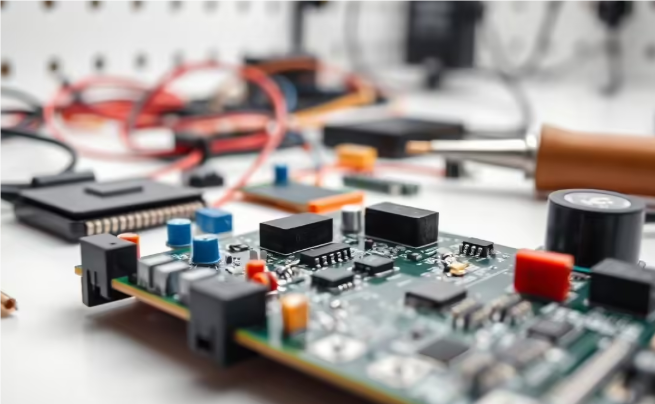

December 5, 2025 /SemiMedia/ — RS Components & Controls (I) Ltd. says India’s fast-growing electronics sector is reshaping how engineering teams select and source semiconductors, with AI-enabled tools now playing a central role in accelerating design cycles. Chief Operating Officer Amit Agnihotri noted in an interview that distributors are moving beyond traditional supply functions and increasingly supporting technical decisions at the earliest stages of product development.
AI tools reshape semiconductor selection workflows
AI-powered search and recommendation features are being integrated into the company’s website and internal analytics systems. Agnihotri said the goal is straightforward: help engineers narrow down viable components faster as they balance time-to-market pressure with expanding design complexity. He added that engineers often “do not lack options—they lack the time needed to filter and compare them.”
The rapid deployment of AI applications in India has also shifted semiconductor demand toward edge AI processors, neural-network accelerators, and high-performance GPUs. These devices are becoming standard in medical systems, automated production lines, automotive electronics, and mobility technologies. Local engineering teams continue to prioritize computing performance, latency, and power efficiency—areas where AI-optimized chips align well with industry needs.
AI adoption drives demand for performance-focused chips
To support faster prototyping and early-stage validation, RS Components offers the DesignSpark platform and provides detailed technical documentation across product pages, including package drawings, 3D models, and application notes. The company is also expanding flexible purchasing options, lifting minimum order requirements on many parts and adding new semiconductor models to help teams secure devices during low-volume trials.
Engineering teams require integrated tools and flexible sourcing
Government initiatives such as the Semicon India program and emerging AI regulations have strengthened India’s semiconductor design and manufacturing ecosystem, Agnihotri said. RS Components is using machine-learning models to forecast demand and adjust inventories ahead of supply fluctuations, helping customers reduce exposure to global lead-time volatility.
Agnihotri added that distributors are now consulted earlier in the design process as customers seek advice on component selection, lifecycle risk, and supply stability. “If we can support those discussions at the front end,” he said, “we see development timelines improving significantly.”







All Comments (0)