
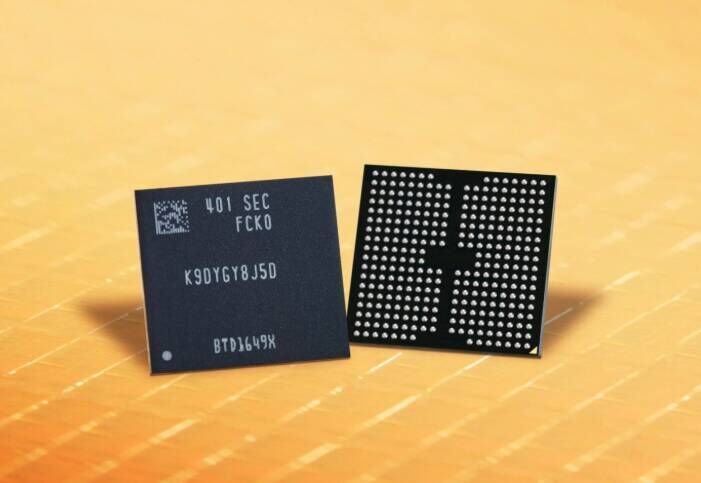

July 23, 2026 / SemiMedia / — The NAND Flash market is expected to record a bit supply deficit of 4% to 5% in 2026, with shortages likely to continue through the first half of 2027, according to TrendForce’s latest market survey.
Supply growth in 2026 will come mainly from process migrations rather than large increases in wafer capacity. Existing fab space remains limited, while major memory manufacturers continue to prioritize investment and production resources for DRAM.
Korean, U.S. and Japanese suppliers are expected to continue upgrading existing NAND Flash production lines in 2027 and selectively expand output at current facilities. Chinese suppliers are likely to add more capacity as new manufacturing equipment comes online.
TrendForce expects Chinese manufacturers’ share of global NAND Flash bit output to rise to nearly 19% in 2027, making them an increasingly important source of additional market supply.
Supported by process migrations and new capacity, NAND Flash supply growth is forecast to exceed demand growth in 2027. The bit supply-demand balance could turn positive during the second half of the year, allowing current supply constraints to ease gradually.
Servers remain the strongest source of NAND Flash demand growth. Shipments of Intel’s and AMD’s next-generation server platforms are expected to accelerate during the second half of 2026, helping global server shipments increase by 17% year over year.
The commercialization of Agentic AI applications is expected to sustain general-purpose server demand in 2027. An easing of server CPU shortages and more stable memory availability under long-term supply agreements should also remove some of the component bottlenecks limiting system production.
Demand from smartphones and notebook computers remains weak. TrendForce expects global smartphone production to decline by 15% to 20% in 2026 and fall again at a more moderate rate in 2027. AI-enabled premium models may support the high-end segment, but weak consumer demand and greater price sensitivity will continue to affect overall production.
Notebook shipments are forecast to decline by around 10% in 2026 and contract slightly again in 2027 as high memory and CPU costs continue to weigh on the market.
Servers now represent more than 40% of total NAND Flash bit demand, while smartphones and notebooks together account for nearly another 40%. Consumer electronics therefore remain capable of materially changing the overall supply-demand balance despite the rapid growth of AI-related storage.
NAND Flash manufacturers currently hold relatively lean inventories. Module makers have accumulated more stock because of slower consumer product sell-through, while inventory across most other customer groups remains under control.





All Comments (0)