
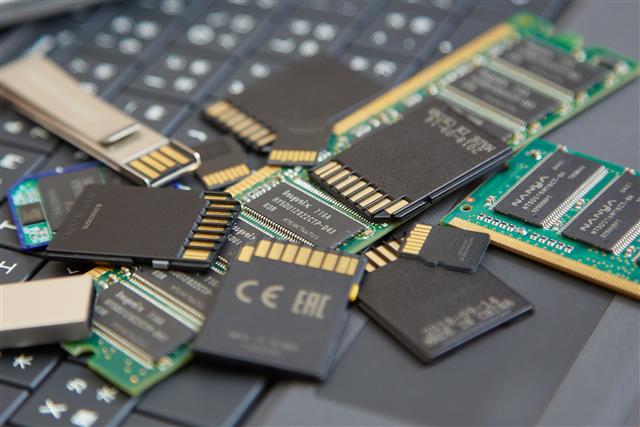

August 19, 2026 / SemiMedia / — Combined revenue of the world’s five largest NAND Flash suppliers rose 77% sequentially to $68.87 billion in the second quarter of 2026, according to research released by TrendForce on August 18.
Demand from AI servers remained strong during the quarter, particularly for enterprise SSDs, resulting in a market-wide supply shortage. NAND Flash manufacturers also implemented substantial increases in average selling prices, providing an additional boost to revenue.
Looking ahead to the third quarter, demand from smartphones and PCs is expected to remain relatively weak as higher component costs push up device prices. In contrast, enterprise SSD demand from AI servers is projected to stay strong.
NAND Flash capacity additions are also expected to remain limited because major memory manufacturers are prioritizing capital expenditure for DRAM and high-bandwidth memory. TrendForce expects tight supply and higher average selling prices to continue supporting NAND Flash revenue growth in the third quarter.
Samsung Electronics remained the largest NAND Flash supplier in the second quarter. Its revenue increased 70.7% sequentially to approximately $23.06 billion as AI server demand lifted product prices and enterprise SSDs accounted for a larger share of shipments. Samsung’s market share declined slightly to 29.3% as several competitors recorded faster growth.
SK hynix Group, including SK hynix and Solidigm, ranked second. Continued production growth for 321-layer NAND and strong orders for Solidigm’s high-capacity QLC enterprise SSDs helped lift revenue by 89.5% to more than $14.27 billion. The group’s operating margin also reached a new high.
Micron’s NAND Flash revenue nearly doubled from the previous quarter, rising 99.2% to $11.85 billion. This was the highest growth rate among the top five suppliers and moved Micron into third place.
Kioxia reported revenue of approximately $10.72 billion, up 79.9% sequentially. Elevated NAND Flash prices and the continued production ramp of BiCS8 technology supported both revenue and profitability, although its market share edged down to 13.6%.
SanDisk’s second-quarter revenue increased 50.7% to nearly $8.97 billion. While its average selling prices benefited from AI-related demand, relatively conservative bit shipment growth left its revenue increase below those of its major competitors.
The second-quarter results highlight the growing influence of high-capacity enterprise SSDs and advanced NAND production ramps on supplier performance. AI server storage is expected to remain the market’s primary growth driver in the third quarter, while demand from consumer electronics remains comparatively subdued.



All Comments (0)