
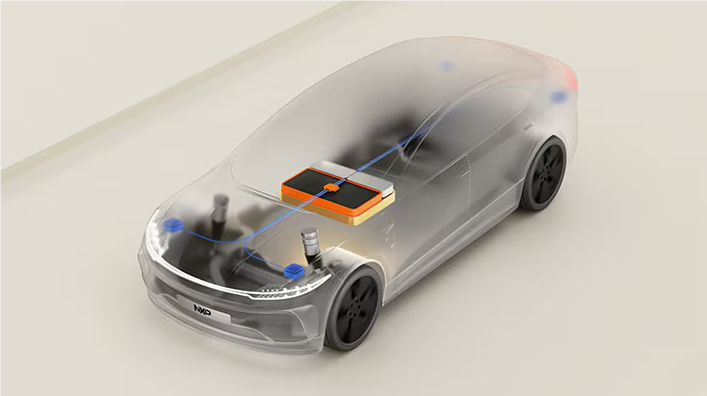

January 9, 2026 /SemiMedia/ — NXP Semiconductors has unveiled its S32N7 automotive processor series, a 5-nanometer system-on-chip designed to support centralized computing architectures in software-defined vehicles.
Built on the same 5nm foundation as the earlier S32N55, the S32N7 is positioned as a central compute hub for core vehicle functions, including propulsion, body electronics, vehicle dynamics, gateways and safety systems. The approach reflects a broader industry move away from distributed electronic control units toward consolidated domain and vehicle computers.
5nm automotive SoCs target software-defined vehicles
By integrating application processing, real-time compute, high-performance networking, and AI and data acceleration on a single SoC, the S32N7 aims to reduce hardware complexity across vehicle platforms. NXP said centralized architectures can lower total cost of ownership through fewer control units, simplified wiring and more efficient software deployment.
Scalable processor platforms support AI-driven vehicle functions
Centralized software control also provides automakers with a foundation to scale AI-enabled features across vehicles, such as predictive maintenance, personalized driving functions and virtual sensing. The processor’s data backbone is designed to support future upgrades in AI performance without requiring a full redesign of vehicle electronics.
The S32N7 portfolio includes 32 compatible variants to support scalable hardware and software configurations across models and brands, while meeting automotive requirements for deterministic timing, functional safety and cybersecurity. The S32N79, the highest-end device in the series, is currently sampling with customers.
Bosch is among the first companies to deploy the S32N7 in its vehicle integration platform. NXP and Bosch have jointly developed reference designs, safety concepts and integration frameworks intended to shorten development cycles for early adopters and accelerate deployment of centralized vehicle computers.





All Comments (0)