
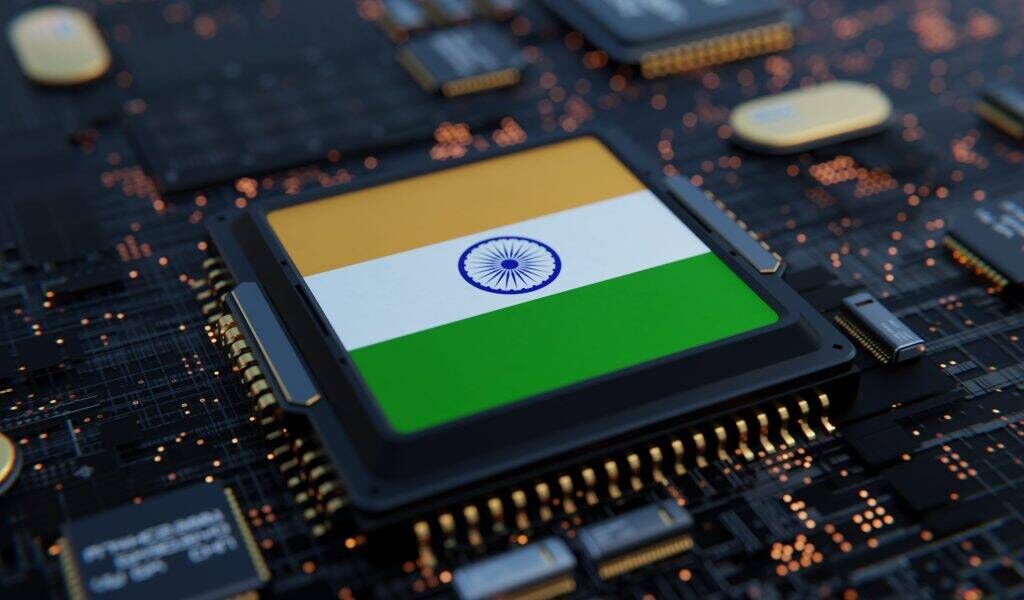

August 17, 2026 / SemiMedia / — India expects another five to eight semiconductor plants to become operational over the next seven to eight years, Prime Minister Narendra Modi said during his Independence Day address on August 15.
Modi described semiconductors as essential components for electronics, medical equipment, transportation systems and other modern infrastructure. India is expanding domestic chip capabilities as part of its technology and supply-chain strategy.
Micron, Kaynes Semicon and CG Semi have already started commercial production at semiconductor facilities in India. These operations are primarily focused on semiconductor assembly, testing, packaging and memory back-end manufacturing.
The Indian government also said the country has begun exporting semiconductor products.
India’s first large-scale front-end wafer fab remains under construction. Tata Electronics is developing a 300 mm facility in Dholera, Gujarat, with technology support from Taiwan’s Powerchip Semiconductor Manufacturing Corporation.
The Dholera fab is designed for a monthly capacity of 50,000 wafers and will support process technologies ranging from 28 nm to 110 nm. Target applications include automotive, mobile, industrial, communications and artificial-intelligence systems.
The Indian government expects the fab to be commissioned in 2028.
India’s cabinet approved Semicon 2.0 in July with a budget of 1.275 trillion rupees. The programme covers six areas: chip and system design, semiconductor equipment and materials, additional fabs, advanced packaging, research and development, and workforce training.
The earlier Semicon 1.0 programme approved 12 manufacturing projects with combined investment exceeding 1.64 trillion rupees. These include one silicon fab, one silicon carbide fab, an integrated gallium nitride Micro LED display fab and nine packaging facilities.
Semicon 2.0 will provide further support for silicon, compound-semiconductor, discrete-component and display fabs. It will also offer incentives for semiconductor equipment, chemicals, gases and other manufacturing materials.
India’s current production base remains concentrated in back-end packaging and testing. The Dholera project will add front-end wafer manufacturing, while the development of local equipment, materials, process expertise and skilled workers will take place over a longer period.
Modi also linked semiconductor and AI development with critical-mineral and energy security. India has launched a National Critical Mineral Mission, announced a critical-mineral corridor and signed supply agreements with several countries.



All Comments (0)