
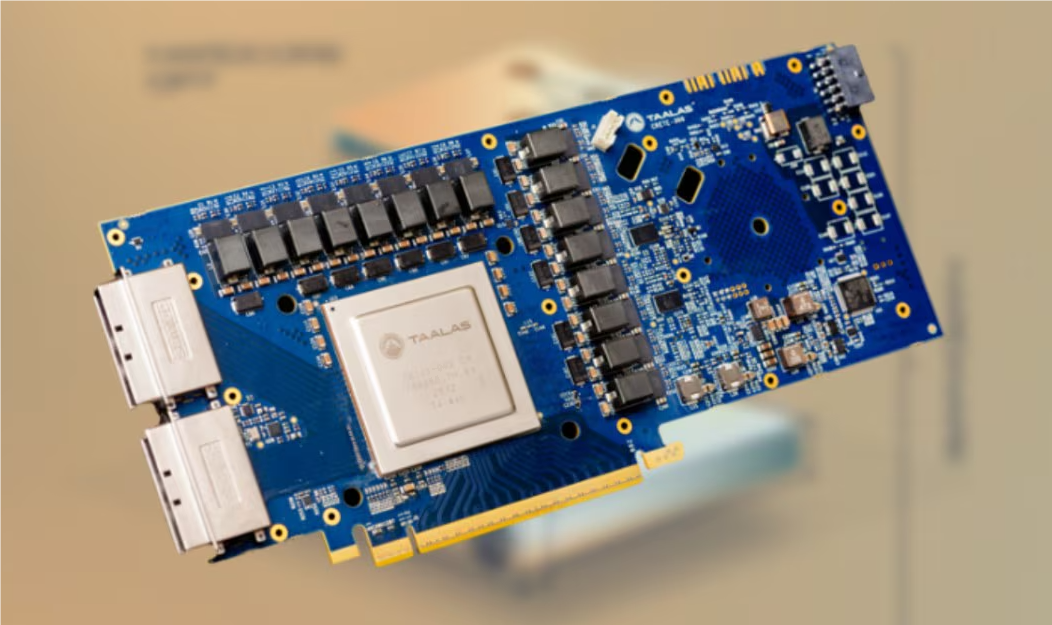

February 25, 2026 /SemiMedia/ — Toronto-based chip startup Taalas said it has raised $169 million in new funding and is developing a custom processor designed to run artificial intelligence inference workloads faster and at lower cost than conventional approaches.
The company said its total funding now stands at $219 million. Investors include Quiet Capital, Fidelity and semiconductor veteran Pierre Lamond. The fresh capital will support further development of its model-specific silicon and manufacturing plans.
Interest in dedicated AI inference hardware has grown in recent weeks after Nvidia licensed intellectual property from startup Groq in a deal valued at about $20 billion. The move has drawn attention to emerging architectures aimed at speeding up the response phase of large AI models.
Taalas is taking a different path from general-purpose accelerators by embedding parts of an AI model directly into silicon. The approach allows the company to build processors tailored to specific models, such as smaller versions of Meta’s Llama family. Its chips also rely heavily on on-chip static random-access memory (SRAM) to improve data access speed and reduce dependence on external memory.
Chief Executive Ljubisa Bajic said the model-specific, hard-wired design is central to the company’s performance gains. Taalas prepares most of the chip stack — roughly 100 layers — in advance and performs final customization on two metal layers, which helps shorten turnaround time.
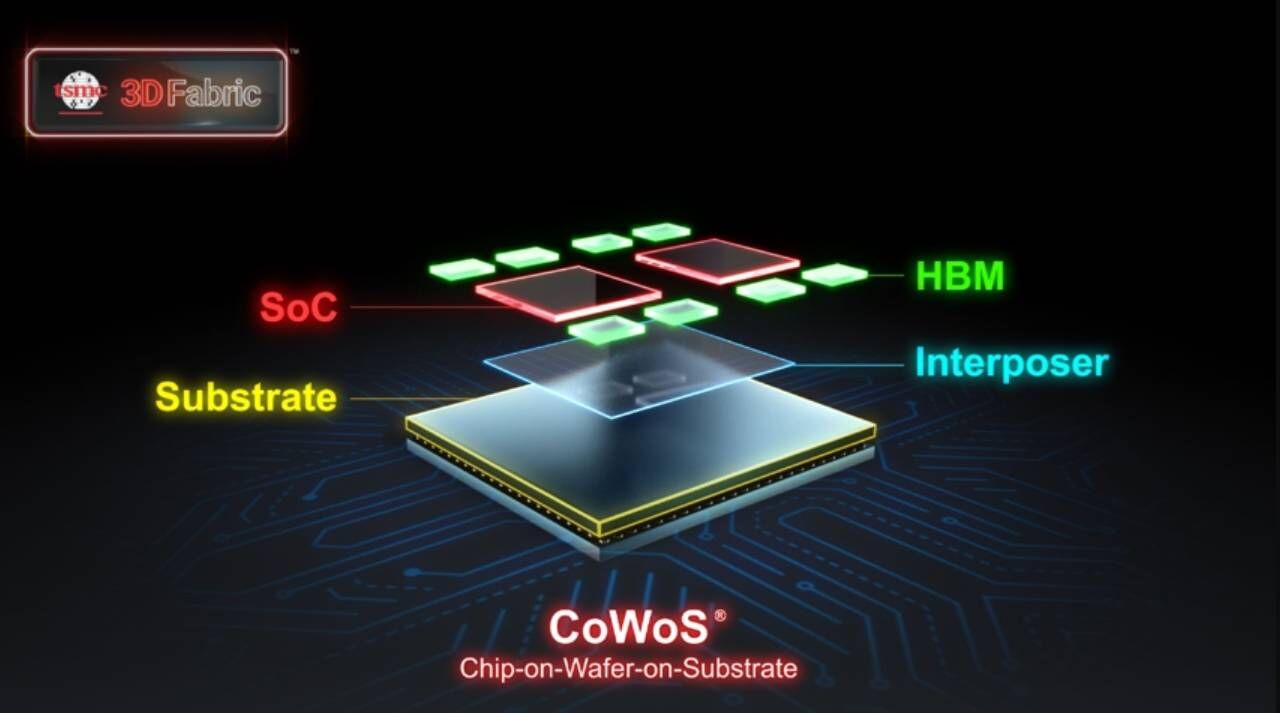
The chips are manufactured by Taiwan Semiconductor Manufacturing Co. Bajic said a model-specific device can be produced in about two months, compared with roughly six months for a large general-purpose AI processor such as Nvidia’s Blackwell.
Taalas said its current silicon can run moderately complex models and that it aims to support leading-edge systems such as GPT-5.2 by the end of 2026. Several other startups, including Groq, Cerebras and d-Matrix, are also pursuing SRAM-heavy inference architectures, underscoring rising competition in the AI semiconductor segment.




All Comments (0)