


December 19, 2025 /SemiMedia/ — Global semiconductor equipment sales are expected to reach a record $133 billion in 2025, rising 13.7% from a year earlier, according to the latest outlook from industry body SEMI.
The association raised its medium-term projections, citing stronger investment momentum linked to artificial intelligence. Equipment sales are now forecast to increase to $145 billion in 2026 and $156 billion in 2027, driven by demand for advanced logic processes, memory expansion and advanced packaging technologies.
Wafer fab equipment anchors global market growth
Wafer fab equipment (WFE) remains the core growth driver. SEMI expects WFE sales to climb 11.0% in 2025 to $115.7 billion, above its earlier estimate.
Higher-than-expected spending on DRAM and high-bandwidth memory (HBM), along with continued capacity expansion in China, underpinned the revised forecast. Growth is expected to continue into 2026 and 2027 as chipmakers invest in advanced logic and memory technologies.
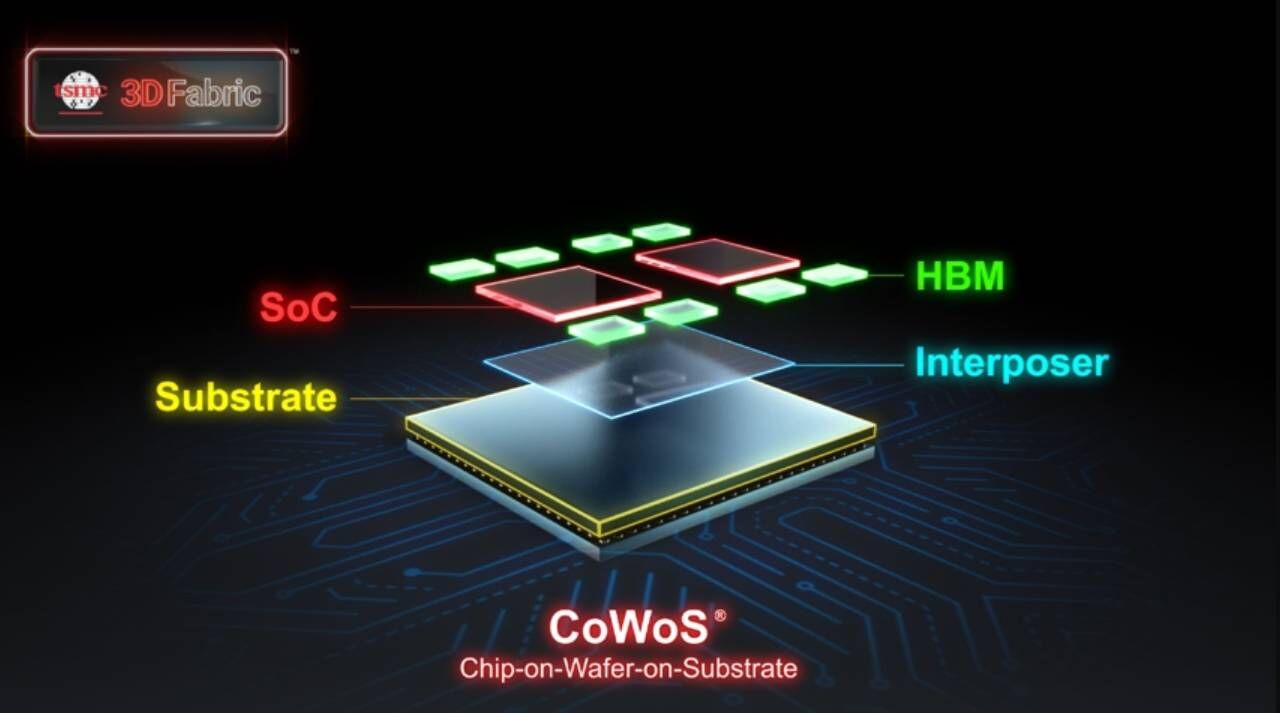
Backend equipment markets are also recovering. Semiconductor test equipment sales are projected to surge to $11.2 billion in 2025, while assembly and packaging (A&P) equipment sales are expected to reach $6.4 billion. SEMI said wider adoption of advanced packaging, particularly for AI processors, should support demand over the next two years.
Memory and advanced packaging shape investment priorities
By application, foundry and logic-related WFE spending is forecast to rise to $66.6 billion in 2025, supported by investment in advanced nodes. As capacity for AI accelerators and high-performance computing expands, capital spending is increasingly shifting toward 2-nanometer gate-all-around (GAA) technologies.
Memory-related equipment spending is also set to grow through 2027, reflecting rising HBM demand, advances in 3D NAND technology and ongoing process upgrades across the DRAM segment.
Regionally, mainland China, Taiwan region and South Korea are expected to remain the top three equipment spending markets. China continues to lead on sustained investment in mature and selected advanced nodes, while Taiwan’s spending reflects leading-edge capacity expansion for AI and high-performance computing. South Korea’s demand is driven by heavy investment in advanced memory, including HBM.



All Comments (0)