
SemiMedia SemiMedia
  • Breaking News
  • MarketWatch
  • Distribution
  • Manufacturer
  • Video
  • About us
Home › MarketWatch › DDR memory shortages may persist until 2027, Winbond says
  • 0

DDR memory shortages may persist until 2027, Winbond says

SemiMediaEdit
November 6, 2025


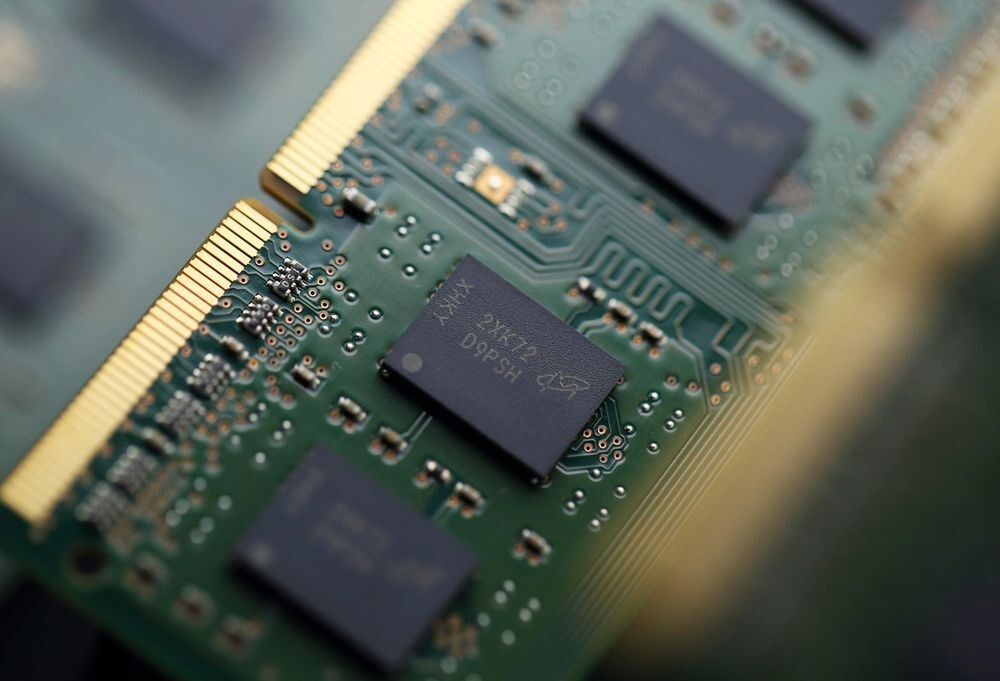
November 06, 2025 /SemiMedia/ — Winbond Electronics expects structural shortages in DDR4 to persist as major DRAM suppliers shift advanced process nodes toward DDR5 and HBM products.

Winbond president Pei-Ming Chen said global Tier-1 DRAM makers pushing below 14nm are unable to run DDR3/DDR4 profitably because those legacy standards were not designed with built-in ECC. JEDEC standards also do not allow DDR3/DDR4 to adopt ECC under those nodes, forcing new fabs to prioritize DDR5. That is creating an unavoidable supply gap in DDR4, which Winbond believes may last until 2027.

Winbond reported its DRAM (CMS) business achieved a three-year high in the third quarter, supported by demand recovery and the ramp of 20nm production. DDR4 output on 20nm doubled quarter-on-quarter and will rise again in the current quarter.

Chen added that installed servers, PCs and many fixed SoC platforms still need DDR4. Customers are actively negotiating multi-year contracts with suppliers that can commit to DDR4 continuity. Winbond remains optimistic on the fourth quarter and expects revenue, shipments and ASP to progressively normalize.

Related

advanced DRAM nodes DDR4 shortage DDR5 migration ECC transition electronic components news Electronic components supplier Electronic parts supplier long-term supply agreements memory supply chain semiconductor demand recovery
Glass-based MEMS packaging gains momentum as Asia-Pacific maintains lead
Previous
Nexperia B.V. reports updates on global operations and China supply chain
Next

All Comments (0)

Back
No Comment.

Top Post

Fire broke out at AKM factory in Japan
Mouser Electronics expands to the Philippines with local customer service center
Qualcomm ranked first in the world's top ten IC design companies
Analyze the key factors and prospects of electronic components shortage from the perspective of wafer industry
What is the root cause of the decline of the Japanese semiconductor industry?
TSMC’s CoWoS capacity to reach 75,000 wafers/month by end-2025

Subscribe SemiMedia

Please check your E-mail to confirm the subscribtion.

Related posts

Global chip capacity shifts as U.S. advanced node share seen reaching 28% by 2030

Global chip capacity shifts as U.S. advanced node share seen reaching 28% by 2030

December 22, 2025
0
Micron sees DRAM tightness lasting beyond 2026 as customers lock in long-term supply

Micron sees DRAM tightness lasting beyond 2026 as customers lock in long-term supply

December 22, 2025
0
Global semiconductor equipment sales seen extending record run

Global semiconductor equipment sales seen extending record run

December 19, 2025
0
Chip shortage forces Honda to halt and cut output, Nexperia supply in focus

Chip shortage forces Honda to halt and cut output, Nexperia supply in focus

December 19, 2025
0
Copyright © 2017-2025 SemiMedia. Designed by nicetheme.
  • Please set up your first menu at [Admin -> Appearance -> Menus]
  • electronic components news
  • Electronic components supplier
  • Electronic parts supplier
  • Infineon
  • Electronic component news
  • Renesas
  • Vishay
  • STMicroelectronics
  • NXP
  • TDK

SemiMediaEdit

Administrator