
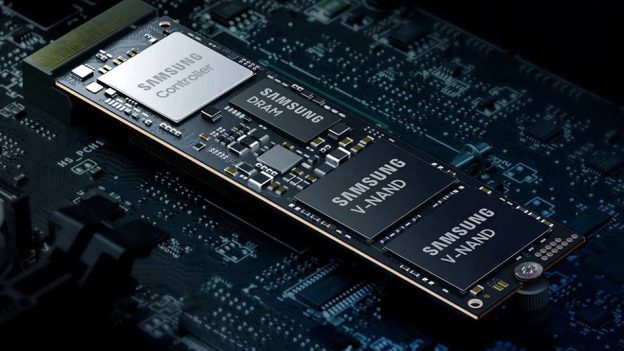

November 20, 2026 / SemiMedia / — Global NAND Flash contract prices are expected to turn downward in early 2027 as rising supply meets weaker enterprise and consumer demand, TrendForce said in a November 19 report. The firm forecasts a sequential decline of 0% to 5% in the first quarter, with price reductions extending to all product categories from the second quarter and potentially widening later in the year.
TrendForce projects NAND bit supply growth of 25% to 30% in 2027. Production increases come from new capacity as well as migration to higher-layer NAND and a greater share of QLC products. These technology changes expand storage output beyond what wafer-start figures alone would indicate.
QLC stores four bits per cell, compared with three for TLC, while higher-layer 3D NAND adds more memory cells vertically. Both increase storage density, so manufacturers can raise the amount of memory produced without a proportional increase in wafer input.
Enterprise SSD demand remains strong in North America, but cuts by Chinese cloud providers exceed the region’s additional orders, according to TrendForce. GPU shortages and elevated inventories are among the pressures behind those reductions.
Consumer markets offer limited support. TrendForce’s November 11 PC report described rising finished-goods inventories and reduced client SSD purchasing, with some procurement cuts extending into the first quarter of 2027. Higher device prices have weakened sales, while brands are considering lower-specification products to contain costs. Fewer devices sold and less storage per device would both reduce NAND bit demand.
The pricing shift is already visible in the difference between spot and contract markets. TrendForce has reduced its forecast for fourth-quarter 2026 NAND contract price growth to 8% to 13%, while spot prices have recently fallen more than 20% under channel inventory pressure. Contract prices are therefore still expected to rise this quarter, ahead of the projected reversal in 2027.






All Comments (0)