


August 28, 2026 / SemiMedia / — Memory manufacturers are accelerating both production investment and new architecture development to address growing AI demand. Kioxia and Sandisk are preparing another major expansion of NAND flash investment in Japan, while Samsung Electronics and SK hynix are participating in the commercialization of Qualcomm’s High Bandwidth Compute technology.
Kioxia and Sandisk announced that they expect to invest approximately ¥5 trillion, or more than $31 billion, in Japan through 2032, contingent on government support. The investment will cover flash memory technology development, manufacturing infrastructure and long-term capacity expansion.
The companies have invested approximately ¥9 trillion in Japan over the past 25 years. Future spending is expected to strengthen their Yokkaichi and Kitakami operations as AI data centers, enterprise storage systems and high-capacity SSDs create greater demand for high-performance and energy-efficient NAND flash.
In the DRAM segment, Samsung Electronics and SK hynix are working with Qualcomm to advance HBC commercialization. Qualcomm Executive Vice President Durga Malladi said at Deutsche Bank’s 2026 Technology Conference on August 26 that he recently visited South Korea and met with the two major memory manufacturers.
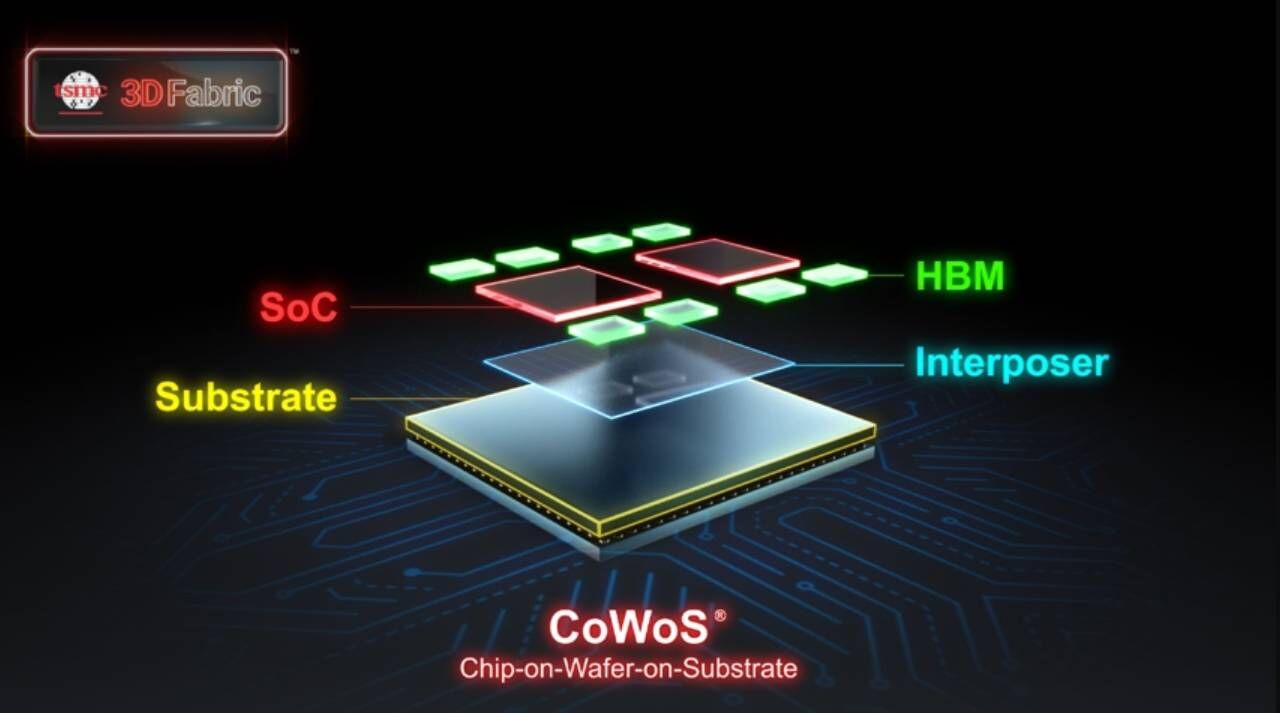
HBC is a near-memory computing architecture designed to reduce the distance between processing units and DRAM in a 3D-stacked structure. By limiting repeated data movement during AI inference, the architecture is intended to improve effective bandwidth and reduce latency and power consumption.
Qualcomm plans to introduce first-generation HBC with its AI250 accelerator in 2027, followed by second-generation HBC in the AI300 platform in 2028. Under the reported division of responsibilities, Qualcomm would design the compute silicon and manage system integration, Samsung and SK hynix would provide stacked DRAM, and TSMC could participate in integration and advanced packaging.
The projects remain independent but illustrate two parallel directions in AI memory investment. Kioxia and Sandisk are expanding NAND capacity and long-term supply, while Samsung and SK hynix are continuing their HBM roadmaps and exploring an architecture that places computing functions directly beside stacked memory.
Competition in AI memory is therefore extending beyond storage capacity into bandwidth, data-movement efficiency, power consumption, packaging and total system cost. As AI inference workloads expand, NAND, HBM and emerging HBC architectures are all attracting new investment.



All Comments (0)