
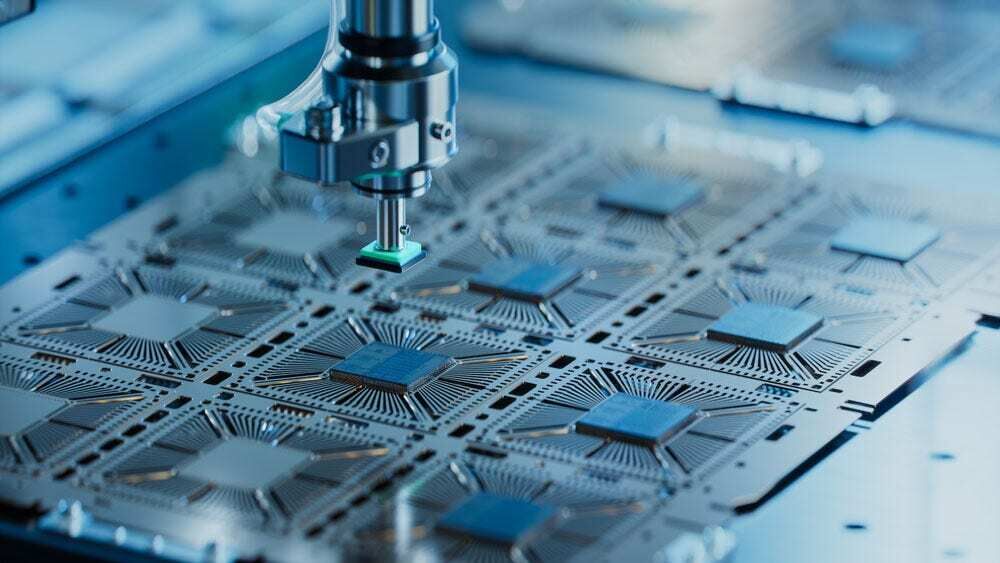

May 11, 2025 /SemiMedia/ — Korea Printed Circuit Association (KPCA) forecast the global semiconductor packaging market will reach $618.9 billion this year, with AI infrastructure demand continuing to drive growth across advanced packaging and high-performance PCB technologies.
According to the industry group, AI servers have become one of the main growth engines for the semiconductor sector. Demand for high-bandwidth memory (HBM), 2.5D and 3D packaging, and chiplet-based heterogeneous integration continues to rise as chipmakers and system companies push for higher computing performance and bandwidth.
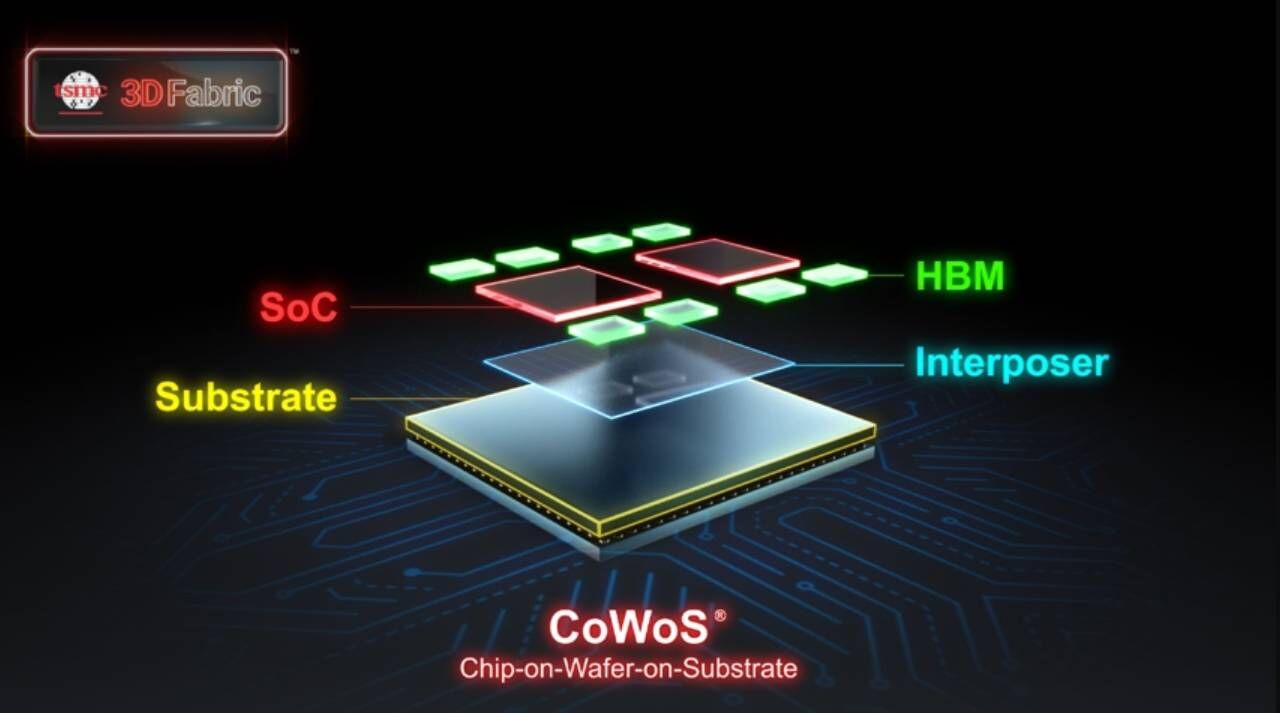
KPCA said competition in the semiconductor industry is increasingly shifting from front-end process scaling toward advanced back-end packaging technologies. Packaging methods such as CoWoS, 2.5D integration, and advanced substrate technologies are becoming more important for AI accelerators and data center hardware.
The automotive sector is also contributing to demand growth. As electric vehicles and autonomous driving systems become more widely adopted, advanced packaging technologies including FC-BGA and 2.5D packaging are seeing broader use in ADAS and automotive computing systems that require higher thermal stability and reliability.
The report noted that the global OSAT market remains highly concentrated, with the top 10 outsourced semiconductor assembly and test companies controlling around 80% of total market share. Companies in Taiwan and mainland China together account for roughly 70% of the industry.
Meanwhile, South Korean companies are increasing investments in HBM packaging and wafer-level advanced packaging technologies. Although flip-chip packaging remains the mainstream solution, KPCA expects 2.5D and 3D packaging demand to grow by more than 30%.
The association also said AI-related infrastructure spending is accelerating the shift of the PCB industry toward higher-value products such as FC-BGA substrates and high-layer-count boards. KPCA estimates South Korea’s PCB market will grow about 19% this year to 17.41 trillion won.
However, the industry still faces supply chain and cost pressure. Prices of key materials including copper foil and resin remain volatile, while products such as copper clad laminates and high-performance prepreg materials still rely heavily on overseas suppliers.
KPCA Secretary General Ahn Young-woo said future semiconductor and PCB development will increasingly combine advanced packaging, high-performance substrates, and material technologies into an integrated ecosystem. He added that emerging technologies such as glass substrates could further reshape the PCB industry in the coming years.



All Comments (0)