


May 6, 2026 /SemiMedia/ — Murata Manufacturing Co., Ltd has introduced a new “bulk case” packaging system for multilayer ceramic capacitors (MLCCs), aiming to reduce packaging material use and improve manufacturing efficiency across surface-mount production lines.
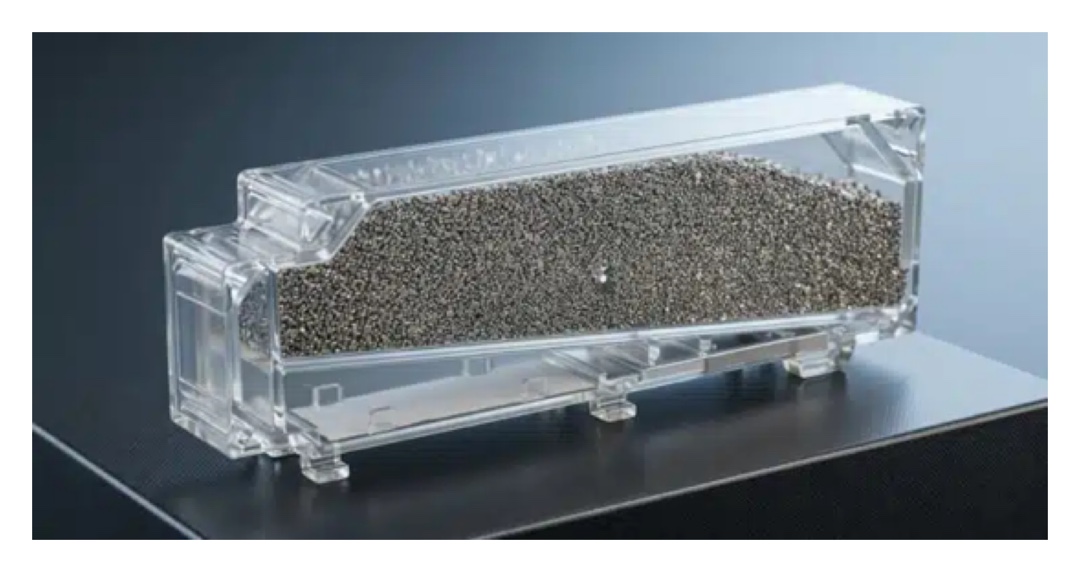
The new method replaces conventional tape-and-reel packaging with a dedicated bulk container system that allows MLCCs to be directly fed into pick-and-place equipment through bulk feeders. The solution is designed for ultra-small component sizes, including 01005 and 0201 packages.
Murata said the new system can reduce packaging material usage by up to 99% compared with traditional methods. It also significantly increases packing density, with up to 500,000 01005-size components per case versus around 20,000 per reel under conventional packaging.
Beyond environmental benefits, the company highlighted operational gains. Higher packing density reduces the frequency of material replenishment and changeovers on SMT lines, while also lowering storage space requirements and internal handling movements within production facilities.
The company has already shipped more than 10 million units internally within the Murata Group and said consistent quality has been confirmed in mass production. The packaging concept is also being developed in collaboration with industry partners under JEITA-led efforts, and has been standardized under IEC TS 60286-6-1, with a royalty-free licensing model planned.
Industry observers say the bulk case system could gradually influence cost structures across the MLCC supply chain. While it does not directly change semiconductor-like wafer or material costs, it reduces downstream logistics and packaging-related expenses, which may improve overall cost efficiency for high-volume users.
In the short term, pricing of MLCCs is unlikely to change significantly, as material and capacity remain the main drivers. However, reduced packaging and handling costs could create incremental downward pressure on total delivered cost, especially for large-scale automotive and consumer electronics customers.
On lead times, the higher packing density and simplified handling process may improve internal manufacturing flow and shorten logistics cycles. This could slightly reduce effective delivery time variability for high-volume orders, particularly in tightly scheduled SMT production environments.
Over the longer term, analysts note that if bulk packaging becomes widely adopted across the industry, it could contribute to smoother supply chain throughput and marginal improvements in delivery stability rather than dramatic price shifts.










All Comments (0)