
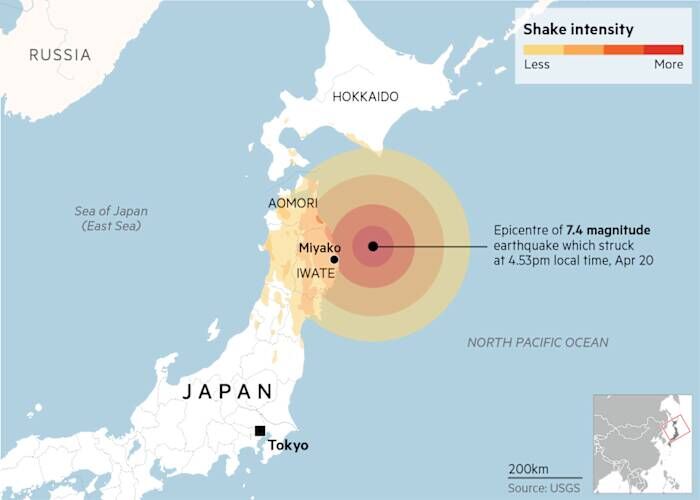

April 21, 2026 /SemiMedia/ — A strong earthquake off Japan’s northeast coast on April 20 has raised concerns about potential disruption to the semiconductor supply chain, with several key facilities halting operations for safety checks.
The quake, measured at magnitude 7.7, hit areas including Iwate, Miyagi and Fukushima, where many semiconductor plants and material suppliers are located. Transport in the region was briefly affected, though airports and nuclear facilities reported normal operations.
Kioxia halted production at its NAND flash plants in Iwate, which account for about 5% to 8% of global supply. The company is checking cleanrooms and equipment after the quake. No major damage has been reported so far, but the restart timing is still unclear.
Tokyo Electron also stopped operations at its site in Iwate, a key hub for chip equipment production and shipment. The pause may slow deliveries in the near term, depending on how quickly checks are completed.
Wafer suppliers Shin-Etsu Chemical and SUMCO paused production at plants in Miyagi and Fukushima for inspection. Early checks show no damage, and operations are expected to resume soon, suggesting limited impact on wafer supply.
The biggest concern is in photoresist, a key material used in chipmaking. A major plant in Fukushima has been shut down for full inspection and may take weeks to return to normal output. Another nearby facility has also stopped production. Given the high concentration of advanced photoresist capacity in the region, the impact could last longer than in other segments.
Industry sources say the overall impact is likely to be short-term and limited to specific areas. However, supply of NAND and some materials may tighten briefly, especially in segments already running at high utilization.







All Comments (0)